The overall aim of the pilot training course is to provide the knowledge and experience in relation to civil or military night vision goggles (NVG) operations, their associated equipment, cockpit lighting and compatibility issues. The course content is tailored to the customer’s requirements. Flight crews are given practical exposure to improve their awareness of the safety hazards associated with NVG operations.
Course Subjects
As an overview, the course will include at least the following subjects:
- Aeromedical factors relating to the use of NVGs to include how to protect night vision, how the eyes adapt to operate at night, self-imposed stresses that affect night vision, effects of lighting (internal and external) on night vision, cues utilized to estimate distance and depth perception at night, and visual illusions.
- NVG performance and scene interpretation.
- Normal, abnormal, and emergency operations of civil and military NVG equipment.
- NVG operations flight planning to include night terrain interpretation and the factors affecting it.
Training Using NVGs
The training to use NVGs may be performed in an aircraft or simulator suitable for the purpose, and should include at least the following subjects:
- Preparation and use of internal and external aircraft lighting systems for NVG operations.
- Pre-flight preparation of NVGs for NVG operations. Proper piloting techniques (during normal, abnormal, and emergency aircraft operations) when using NVGs during the takeoff, climb, en-route, descent, and landing phases of flight that includes unaided flight and aided flight.
- Normal, abnormal, and emergency operations of the NVG during flight.
- Inadvertent IMC and aircraft recovery procedures, including unusual attitude recovery procedures.
Phase One
This phase is intended to provide flight crews with a detailed grounding in the associated academics and some practical training in NVG handling and preparation.
Phase Two
This phase builds on the newly acquired knowledge and experience and reinforces it with actual NVG flight experience under the supervision of a NVG qualified instructor pilot on a Bell 206 or, on the customer’s own NVG-compatible helicopter.
Phase Three
This phase includes flight instruction in-country on the customer’s own aircraft, to further consolidate the tactical relevance of the training.
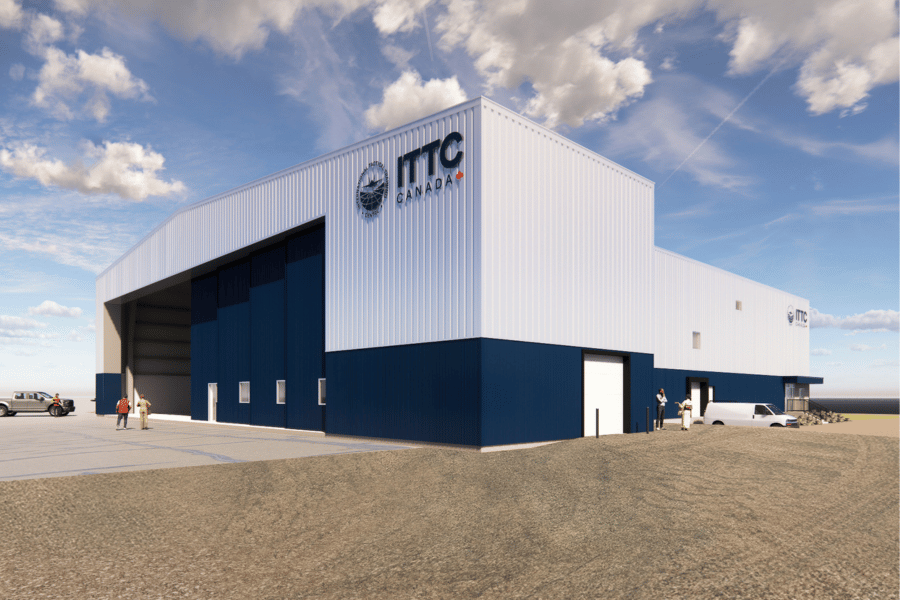
The new ITTC facility in North Bay, Ontario, provides an ideal environment for advanced tactical training. Located between Lake Nipissing and Trout Lake, the city is strategically positioned at the junction of major highways and approximately three hours from Toronto. North Bay is well connected by road, rail, and air, and features Northern Ontario’s longest 10,000-foot runway, supporting a wide range of aircraft operations and ensuring excellent accessibility for domestic and international students.
ITTC supports students through a dedicated administration and pastoral care team, assisting with housing, transportation, and relocation needs to ensure a smooth transition into training. Programs are tailored to meet specific operational requirements and are delivered using a diverse fleet of aircraft, supported by modern training technologies including simulation, virtual reality, and mixed reality. Backed by decades of military and tactical training experience and trusted by air arms worldwide, ITTC delivers focused, cost-effective training in a highly capable and efficient operating environment.
Professional, Bespoke Tactical Training Solutions
Talk to an ITTC expert today about your unique requirements, request a quote, or learn more about courses and delivery.